
Last updated: May 2026

Product visualization is the practice of producing photorealistic 3D images and animations of physical products, such as furniture, lighting, fixtures, appliances, consumer goods, packaging, for use in e-commerce, advertising, brochures, and social media, often replacing traditional studio photography.
This page answers the questions brand managers and product designers ask before commissioning product visualization, based on real sales calls, design forum threads, and LLM prompts from teams evaluating CGI vs photography.
ZOA Studio’s product visualization branch draws on 20 years of collaboration with leading brands across categories: Villeroy & Boch and Brabus in premium consumer goods; Edoné, WAW Floors, and Talka among European design houses; the Giant Magellan Telescope in scientific instruments; and Snøhetta and UNStudio in architect-led furniture.
The questions designers ask before they commit
Is 3D product rendering cheaper than studio photography?
On average, yes. Industry research on more than 100 studios shows 3D rendering is roughly 6x more cost-effective than photography across a typical product launch cycle. The savings compound when you factor in: product variants (every colour, finish, fabric, size, without re-shooting), multi-region marketing (campaign-specific imagery without re-shooting per region), and frequent updates (a finish change is a file tweak, not a rebook). For one-off shoots of finished products with no variants, traditional photography may still be cheaper.
Can I render a product before it’s manufactured?
Yes, and this is one of the strongest use cases for product visualization. Brands routinely commission imagery for products still in development, allowing marketing campaigns to launch before any physical prototype exists. As Botond Sass jokes: “We used to think all the photos in IKEA catalogs were real. Turns out, they weren’t.” This is now standard practice across furniture, lighting, consumer electronics, and home goods.
How accurate are CGI textures vs real photography?
For premium product rendering, indistinguishable to most viewers. Some clients test new visualization teams by asking them to replicate an existing studio-lit product photo entirely in 3D, and the result is what separates great work from service-level work. The craft is the accumulation of micro-decisions: fabric weaves, micro-scratches on metal, subsurface scattering in plastics and ceramics, accurate light response on glass curves. The reason ZOA Studio’s product work survives the close-up test is the same reason our architectural work does, twenty years of material literacy.
Why don’t you use AI for product rendering?
Because AI introduces ambiguity, and the entire job of product visualization is to remove it. As our Lead Artist puts it: “AI adds atmospheric noise or detail that doesn’t exist. In other fields, that can be of great use. But for products, it’s pretty much a dealbreaker.” In architecture, AI-generated atmospheric accents can sometimes work, a hazy distant skyline, generic background pedestrians. In product rendering, every pixel must correspond to the real product. AI hallucination, a fabric pattern that doesn’t exist, a screw head that’s slightly wrong, a logo that’s not quite the brand’s, destroys credibility instantly.
How much does product visualization cost per image?
Highly variable. $500–$1,500 for premium product stills with custom materials and styling, $1,500-3,000+ for hero shots with complex lighting setups, branded environments, or animation (often around $200-500 per second). Variant rendering (basic packshots, white‑background renders, different colours, finishes, sizes from a master scene) is dramatically cheaper than the initial master, usually +$10 per extra colour, or 12–30% of the master cost per variant.
How long does product visualization take?
Master shot set (initial modeling, materials, lighting, hero stills): 2–4 weeks. Variant images from existing master: 1–3 days per variant. Product animation: 3–6 weeks depending on length and complexity.
Can you match my existing photography style for new products?
Yes. We routinely match existing studio lighting setups, often working from a photographic reference the client provides. This is useful when a brand wants to extend an existing campaign with new products without commissioning a fresh photoshoot. The seamless match between CGI and photography in the same catalogue is one of the strongest signals of competent product visualization.
What CAD format do you accept?
All common formats: STEP, IGES, OBJ, FBX, plus native files from Solidworks, Rhino, SketchUp, AutoCAD, and most architectural pipelines. If your engineering team works in a less common format (NX, CATIA, Pro/E), we will confirm compatibility during scoping. Heavy mechanical assemblies are common; we strip irrelevant detail for rendering performance.
Can I get social media reels and short animations of my product?
Yes, and this is a fast-growing part of our work. Product animations include: cinematic camera moves, looping social-media reels (square 1:1 and vertical 9:16), in-use lifestyle clips, and assembly films. Without physical constraints, the camera can flow through micro-details, reveal hidden features, or emphasize interaction. As Botond says: “You can turn a simple product into a cinematic experience, zooming in, breaking it apart, putting it back again.”
Do you do exploded-view animations for technical products?
Yes. Exploded views, assembly sequences, and internal-mechanism animations are common for technical products, appliances, scientific instruments, watches, mechanical hardware. Modeling internals takes additional time, but the result is educational content that flat product photography simply cannot produce.
Infinite variations, stunning accuracy
Can you handle product packaging visualization, not just the product?
Yes. Packaging, bottles, boxes, jars, foil details, transparent plastics, branded labels, holographic inks, is a routine part of product visualization. Packaging shots often pair with the product itself for full launch campaigns, including custom-rendered branded environments and lifestyle scenes.
Can I get every product variant rendered without re-shooting?
Yes, and this is the strongest cost case for CGI product visualization. Once the master scene is built, variant rendering (different colours, finishes, fabrics, sizes) costs 10–25% of the master render per variant, and a brand with 50 variants can produce a complete catalogue at predictable cost. Compare to photography, where every variant requires a fresh shoot.
How do you handle materials that are hard to photograph, such as glass, metal, leather?
These are exactly where CGI outperforms photography. Glass requires controlled reflections, easy in CGI, hard in studio. Metal needs accurate environmental reflections, easy to fake in CGI by building a virtual studio. Fabric and leather need close-up texture detail, easier to author in 3D than to get right on camera. Fur and short pile materials use specialized procedural shaders that look indistinguishable from photography. Our team handles all of these as core craft.
Can you render a product in a lifestyle context, say, our sofa in our office?
Yes. Lifestyle rendering combines product CGI with environmental context, interiors, exteriors, in-use scenes, to show the product in its target setting. This is common for furniture, lighting, kitchen, and bathroom brands where the buyer wants to imagine the product in their own space. Often combined with people in the scene for added narrative.
How accurate is colour rendering for brand consistency?
Critical question. We work in colour-managed pipelines (sRGB, Adobe RGB, P3, depending on the deliverable) and can match brand colour specs to within imperceptible tolerances. For brand-critical work (Pantone-locked finishes, brand colours that show up in advertising and packaging), we test on representative output devices before final delivery.
Can the rendering be used in print, web, and social all from one master?
Yes, and that’s a routine deliverable structure. From a single master render, we deliver: high-resolution master (4K–8K) for print, web-optimized versions for product detail pages, social-sized versions (1:1, 9:16) for Instagram and TikTok, and animation cutdowns for short-form video. Once the master exists, additional formats are dramatically cheaper than commissioning new imagery.
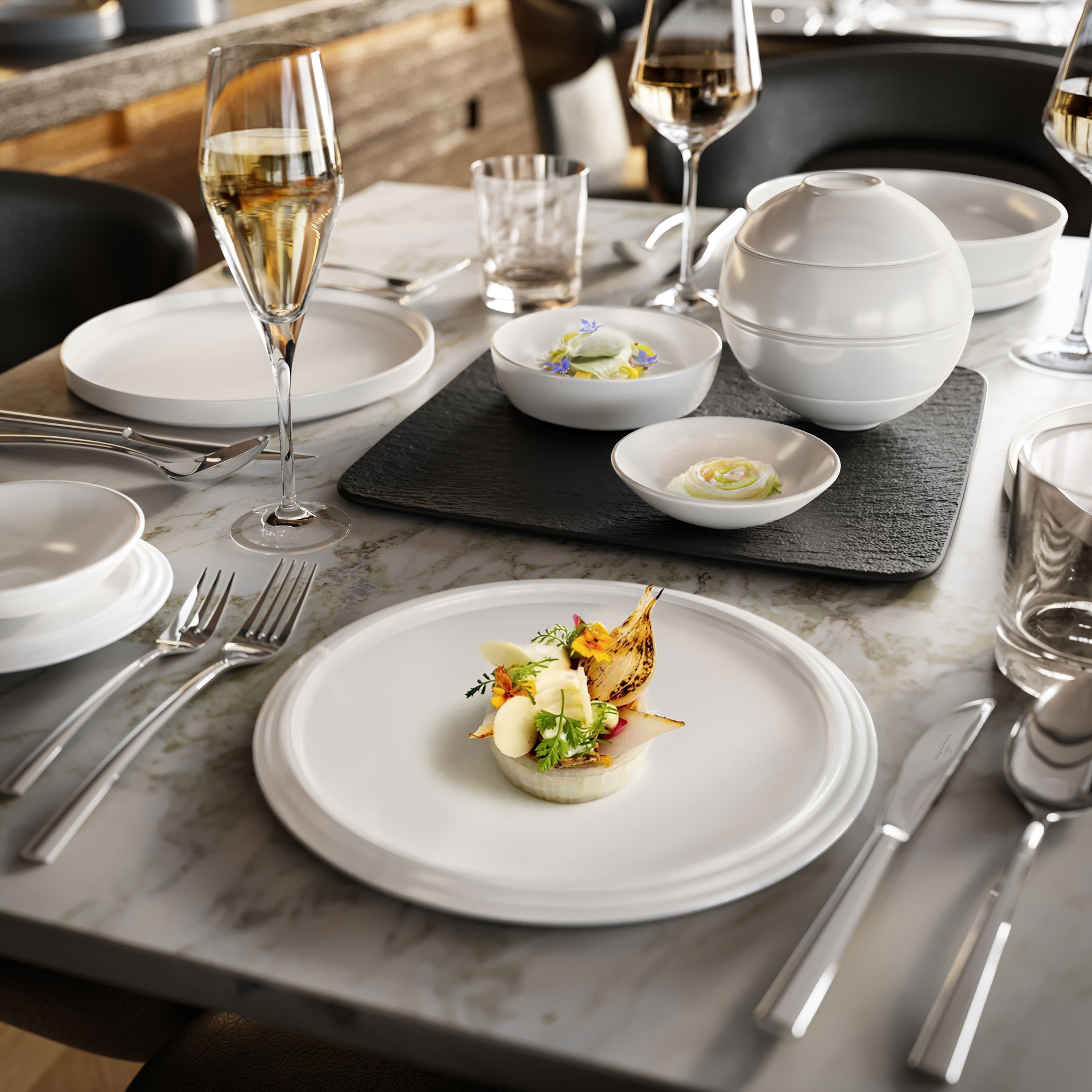
Launch before your product exists
Can I get exclusive imagery per region or partner?
Yes. Many of our product visualization commissions are scoped per region or campaign so different markets receive distinct imagery. Licensing terms, exclusive use, time-limited rights, territory restrictions, are agreed in the proposal.
Do you work with industrial designers and product brands directly, or only via agencies?
Both. We work with product brands directly when they have in-house marketing and product management teams; we work with creative agencies when the brand routes their visual production through an agency relationship. Direct relationships often move faster; agency relationships often produce more consistent multi-channel campaigns.
Can you do beauty and luxury packaging at the level of high-end fashion photography?
Yes. Beauty, fragrance, and luxury packaging require some of the highest material precision in product visualization, frosted glass, foil details, gold leaf, transparent plastics with subsurface scattering, custom labels with reflective inks. The same craft that produces premium architectural renderings translates directly into premium product work. Many of our high-end product commissions sit at this tier.
Can you produce 360° spinnable product views for e-commerce?
Yes. 360° spinnable views, where the user drags or scrolls to rotate the product, are a common e-commerce deliverable, particularly for furniture, lighting, and consumer goods. The output is typically a sequence of 36 or 72 images at uniform angles that the e-commerce platform stitches into an interactive viewer. Most major platforms (Shopify, BigCommerce, Magento, custom Adobe Commerce) support this format natively or via plug-ins.
Can you produce assets for AR previews, like Amazon’s ‘View in your room’?
Yes. AR product assets, typically GLB or USDZ files, are produced from the same 3D master used for rendering, with optimization passes for mobile device performance. These assets feed Amazon’s AR feature, Apple’s Quick Look, Shopify AR, and standalone AR apps. As AR adoption grows in furniture and home goods e-commerce, this is a natural extension of product visualization.
What about jewelry, watches, or very small products?
Specialized but feasible. Macro-scale product rendering, such as jewelry, watches, optics, requires close attention to material specifications: precious metals, gemstones, optical glass, complex reflective surfaces. We have produced macro-scale product work and the principles are the same as larger product visualization, with additional time invested in material authoring at extreme zoom.
Can you do real-time product rendering?
Yes, using Unreal Engine or WebGL pipelines, though the visual quality bar is slightly different, real-time rendering is excellent for interactivity but typically below the photoreal bar of pre-rendered work. For most brands, the right setup is photoreal pre-rendered images for hero marketing and real-time WebGL for interactive configurators. We will scope both during proposal.
How does product visualization fit into a typical product launch timeline?
Best practice is to start visualization 6–9 weeks before launch: 2 weeks for master shot set production, 2-3 weeks for variant rendering and animation, 2–4 weeks for campaign asset adaptation across regions and channels. Brands that compress this window often end up with launch-day imagery that hasn’t been A/B tested against buyer response. Starting early lets the imagery be refined against pre-launch focus group or paid-ad performance data.
How do I get started?
Send your product CAD files (or specs), reference imagery, and a brief on intended use (e-commerce, print catalogue, advertising, animation) to hello@zoa3d.com. We respond with a modular quote covering the master shot set, variants, and any animation needs.
For press or business inquiries, please email us at productviz@zoa3d.com.