École Buissonnière
A Village of 3,000 Commissions a CHF 46-million Campus
A ten-classroom school over three levels

Few communes the size of Echandens, barely 3,000 people on the plateau west of Lausanne, sign off a CHF 46-million school. The project is École Buissonnière and the name is the thesis: a school imagined less as a building than as an inhabited park, orchard and running track included.
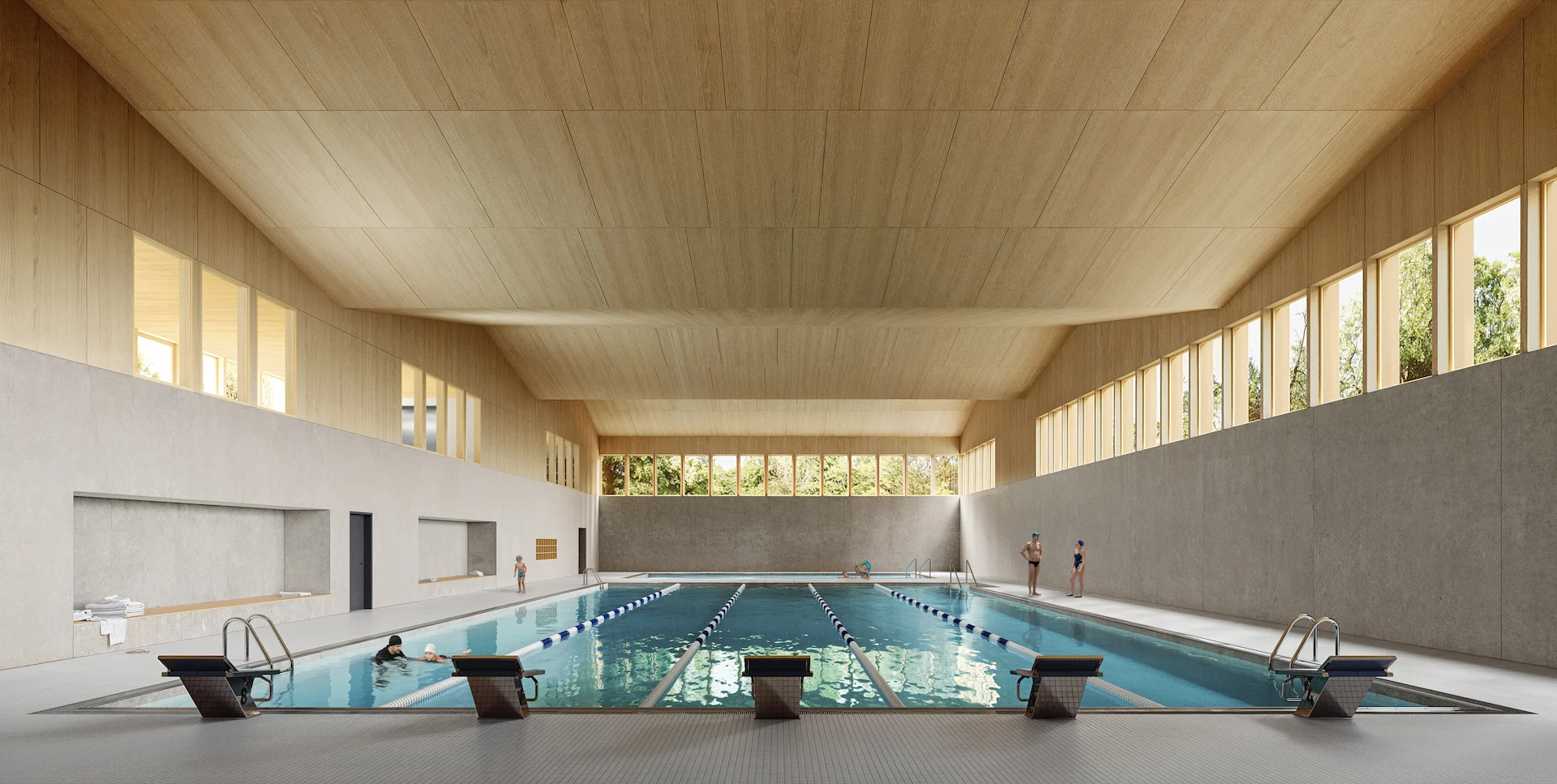
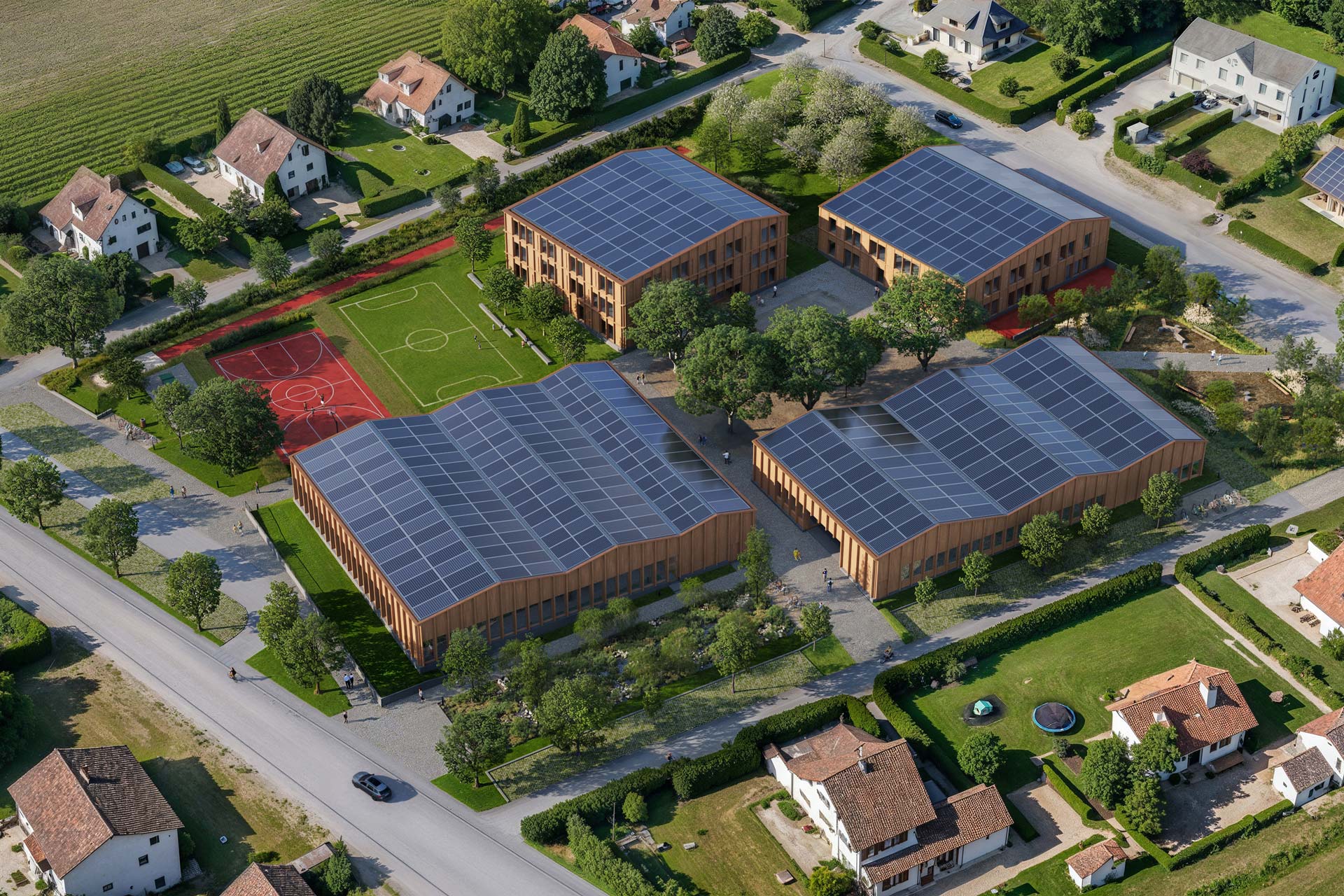
The developer is the Commune of Echandens. The architect is Geneva’s dl-c designlab-construction. The scheme splits the brief into four separate volumes set around a shared courtyard, a ten-classroom school over three levels, a pre- and after-school house for roughly 116 children, a double gymnasium, and an indoor 25-metre pool with a movable-floor learner basin.
It replaces the Collège du Chaney, a 1973 building with no structural room left to grow into a region that keeps adding children. Four communes — Echandens, Lonay, Denges and Préverenges — will share it.
Timber is the hero
Dl-c won this the hard way. An anonymous, two-stage open competition drew 63 entries and the jury took the winner unanimously in December 2022. It’s worth holding onto that number, because open competitions at this scale are where Swiss public architecture stays genuinely meritocratic: 63 teams, five finalists, one result, no shortlist politics.
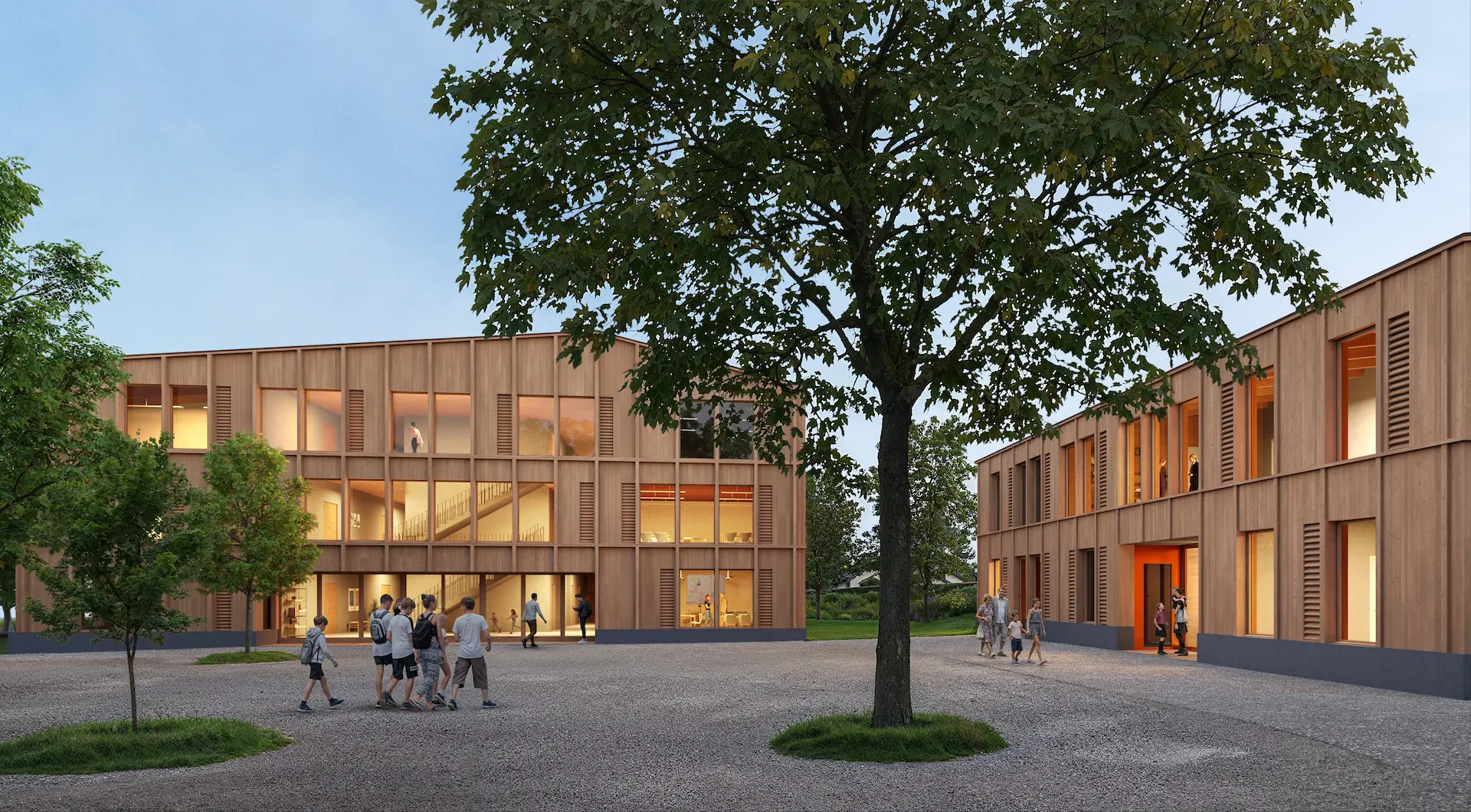
Timber is the hero here, and not as a cladding alibi. Wood runs inside and out, largely natural and unpainted, scaled to children rather than to a civic monument, under a roof engineered to double as solar generation.
Syndic and jury president Jerome De Benedictis singled out the winning scheme’s ecological logic — materials, renewable energy, landscape — as the reason it stood apart; municipal councillor Katharina Zurn called it “the most important investment project in the village’s history.”
There is a quiet challenge with timber, though, and it is a visualization problem as much as a construction one. Every plank behaves differently — grain, knots, density — so a large timber surface built from one repeated texture looks fake on renderings. The conviction has to be earned board by board, which is precisely the kind of patience that separates great presentations from filler.
What ZOA Studio delivered
Architectural visualization tends to get treated as the final step. On École Buissonnière it ran in two passes, three years apart. We produced the original competition set for dl-c in 2022. In 2025 they approached us again: the plans had been revised, the project had survived its long approval drift toward a 2028 opening, and the images no longer matched the building. Updating the renders to match the revised design was the expected part of the job.
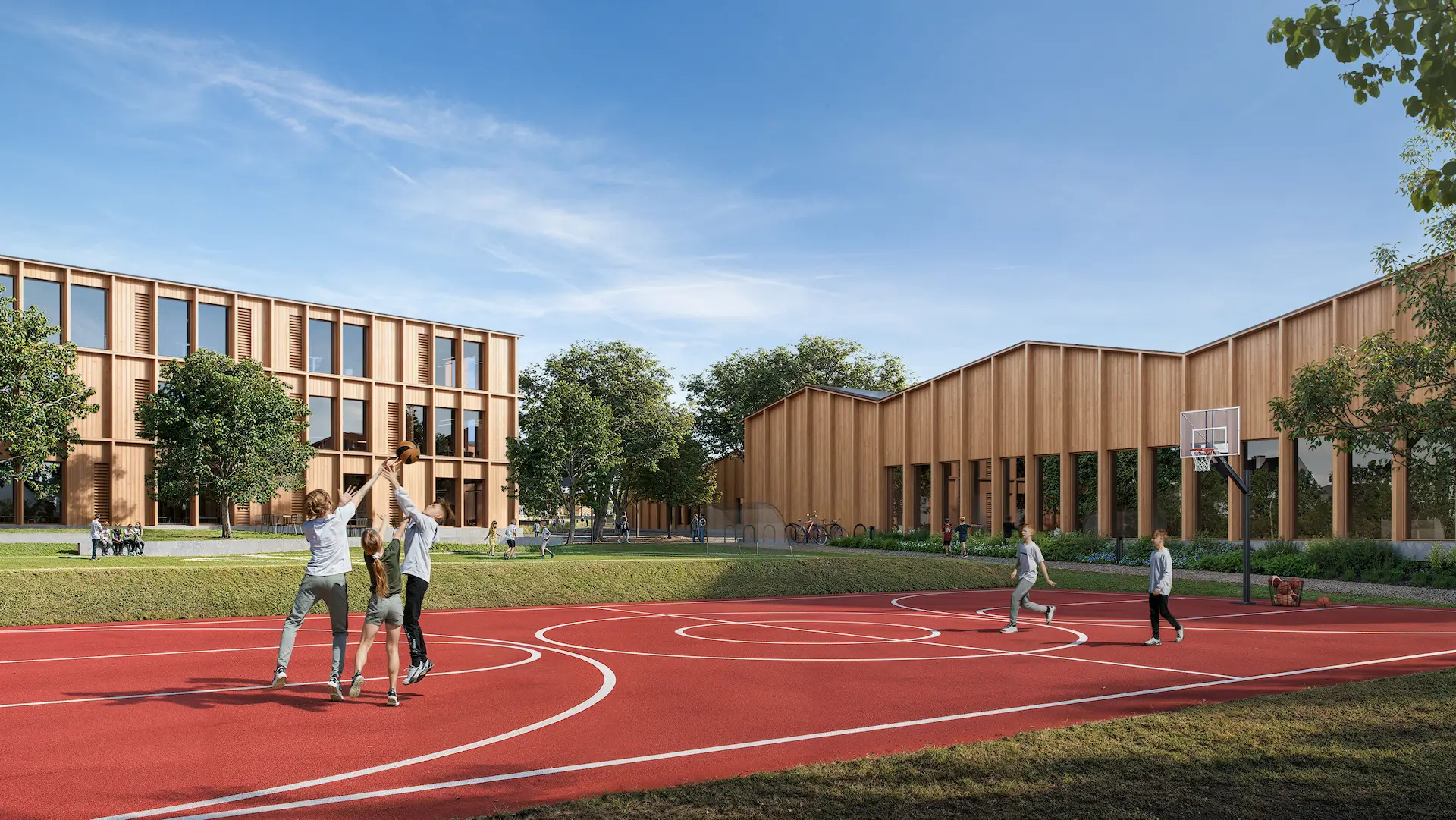
The real brief was tonal. dl-c didn’t only want accuracy, they wanted the project to feel warmer, more positive and more inviting than the 2022 set. So the refresh pushed more green, a warmer light, and far more developed garden and landscape detail, finally making the orchard-and-park idea legible in the picture rather than only in the plan. We also added an aerial that hadn’t existed before, built without a single drone frame.
We refreshed the exterior and street-level views that carry the timber facades, updated the aquatic-centre image so the pool matched the revised design, and produced the new aerial.
At the approval stage, a render is not about perfect detailing. It’s mood, intent, and the quiet feeling that a village has just voted, correctly, for its own future.