Hwajinpo Resort
Shaping Korea’s Next Luxury Retreat
Inside the cross-continental collaboration

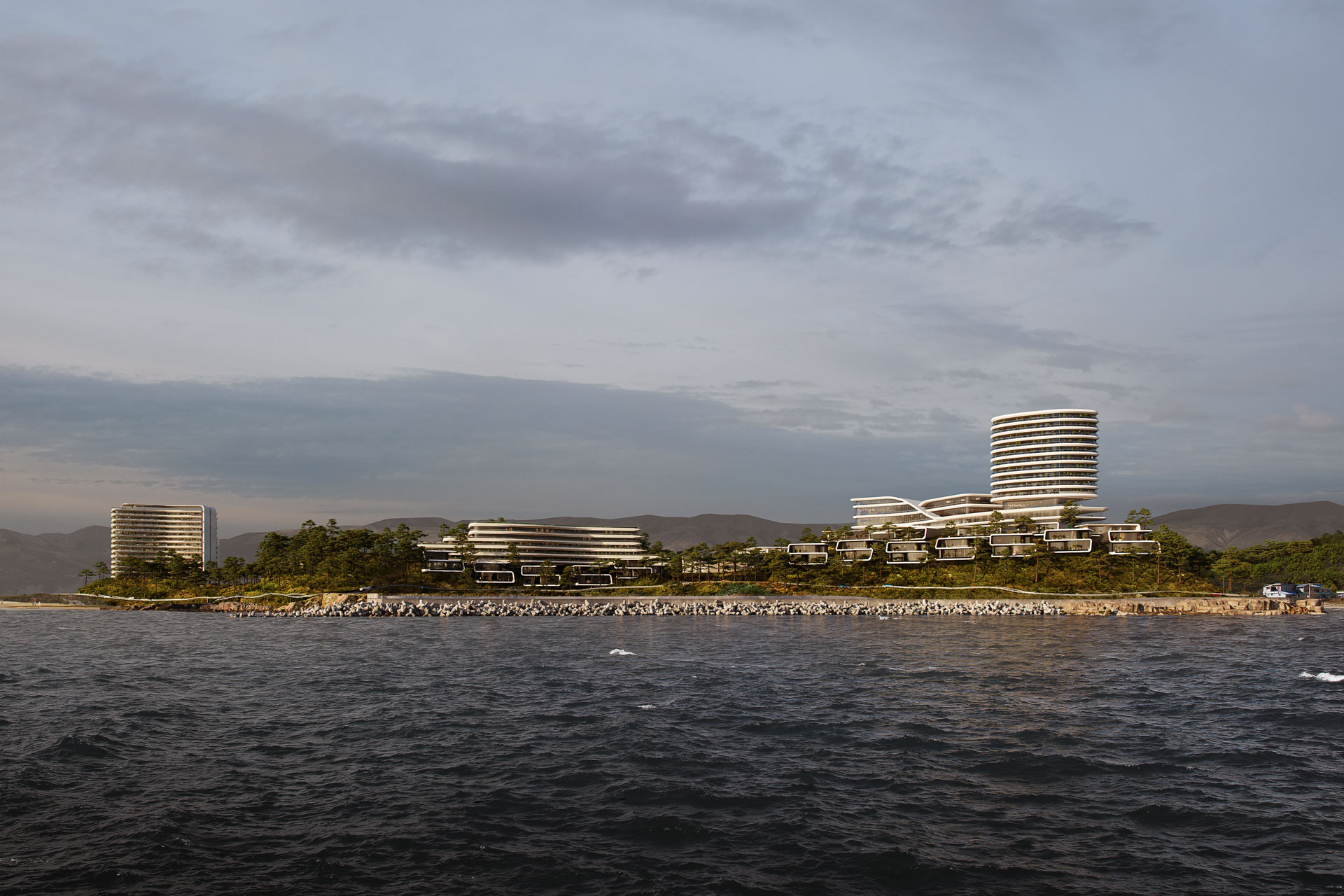
In premium resort competitions, developers now expect an immediate, emotionally charged narrative of place. This expectation shaped the early design stages of the Hwajinpo resort competition in South Korea, a privately commissioned hotel-and-villa development nestled between the East Sea, Hwajinpo Lake, Geumgo-do Island, and the foothills of the Taebaek Mountains. For Heeyoun Kim and the UNS Amsterdam team, the mandate was to translate this rare confluence of natural assets into a fully formed hospitality experience. That ambition, underscored by the absence of on-site photography or drone scans, set the stage for our renderings to showcase a new chapter of the peninsula.
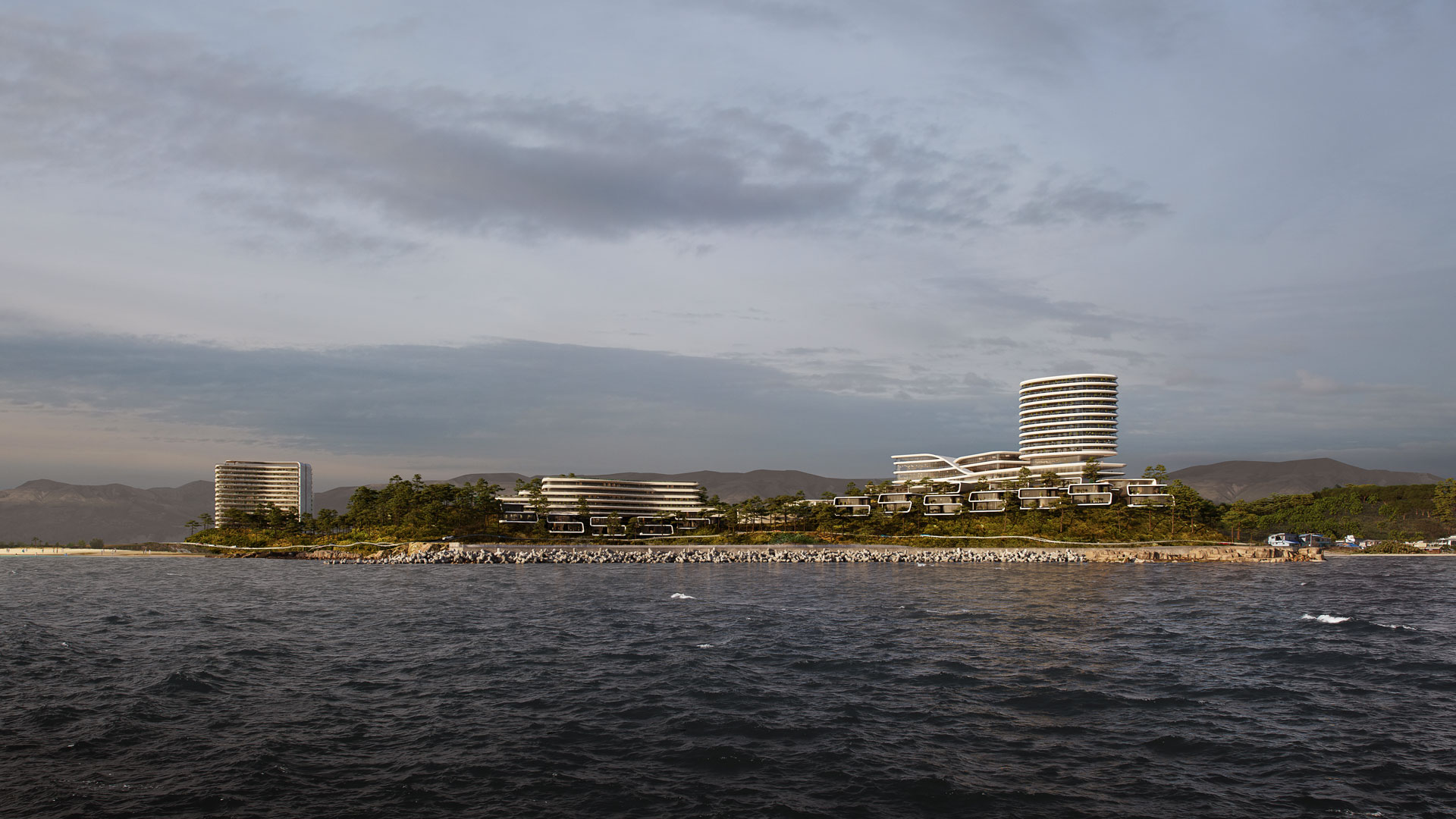
Luxury hospitality in South Korea is in a period of accelerated reinvention, driven by rising domestic tourism, regional competition, and a global shift toward landscape-driven wellness destinations. High-stakes private competitions typically demand near-final renderings long before developers commit to full design budgets, and Hwajinpo heightened these pressures with its hotel tower, cluster of low-rise buildings, and roughly 30 premium villas, all of which needed to be rendered in high fidelity.
The site itself presented another constraint. With no photography and no drone footage available, our visualization team had to reconstruct the entire geography from scratch. This meant not only modeling the terrain and coastline, but also reverse-engineering the character of local vegetation, road infrastructure, view corridors, and atmospheric conditions. In a market where resorts benchmark against the experiential quality of Aman, Six Senses, and Shilla properties, the visualization deliverable had to convincingly demonstrate something essential: the project’s distinctive relationship to both sea and mountain.
Although we had collaborated extensively with UNS on earlier projects, this was our first South Korean partnership with Heeyoun Kim. It became the start of a productive Korea–Netherlands–Budapest axis that later produced three additional public architectural competitions in Asia, including COEX Venue, Chungnam Art Center, and the Daejeon Cultural Project.
The Hwajinpo process illustrates a quiet but profound shift in the global competition landscape. Across destination-driven markets, the focus is moving from pure financial feasibility to a far earlier test: whether a project can deliver an experiential narrative strong enough to anchor investment. This shift places our visualization studio not at the end of the pipeline, but at the conceptual front, where the emotional truthfulness of a rendered environment can influence, and in some cases define, the trajectory of a final project.
Project details