Mathildenhöhe Darmstadt

First Prize in Darmstadt Landscape Architecture Competition

In Europe’s saturated competition circuit, public-space proposals rarely stand out. The winning scheme by capattistaubach for the Mathildenhöhe Darmstadt competition does something precise. Located on the UNESCO-listed Mathildenhöhe Darmstadt, the project reframes the Osthang as an arrival landscape tied to a new information center—not as an isolated park, but as a calibrated sequence of spaces.

The site sits between a formally composed architectural ensemble and a looser, historic landscape. It carries heritage constraints, climate pressures, and the expectation to perform as both civic infrastructure and cultural space. Capattistaubach approached it less as “park design” and more as a spatial system: arrival, transition, stay.

The proposal organizes the site into distinct yet continuous characters. A defined forecourt anchors the information center, framed, legible, almost architectural. From there, the space dissolves into a softer, tree-dominated park condition that reconnects to the historic Platanenhain. Paths are not decorative; they are infrastructural, structuring movement between city, campus, and heritage site. Each fragment retains its identity while contributing to a coherent whole.
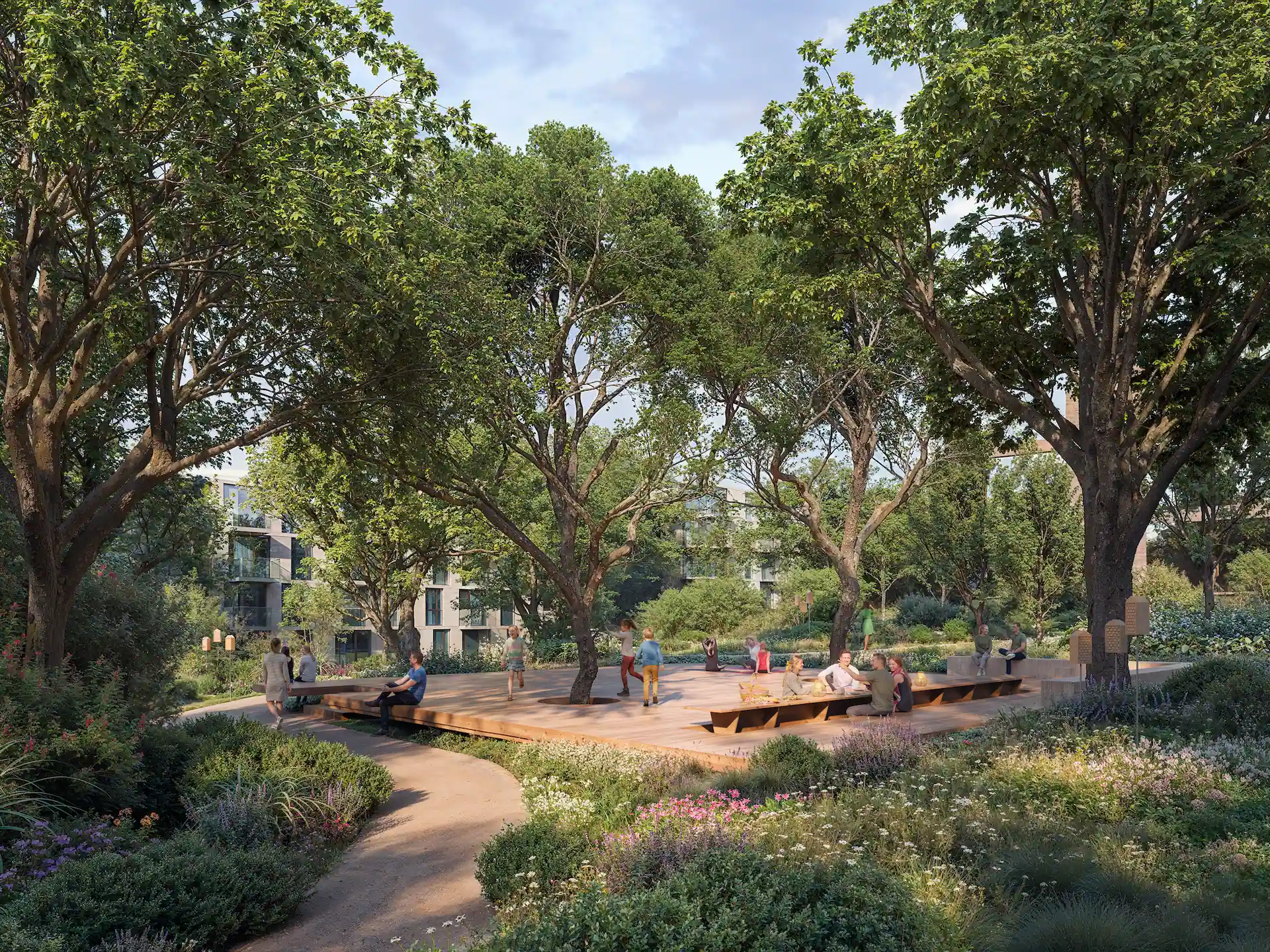
The real challenge was restraint. In a market where competition entries often rely on visual density to signal value, capattistaubach’s approach is almost contrarian: reduce intervention to strengthen experience. Fewer hard surfaces, more permeable ground. Fewer objects, more spatial clarity. This aligns with a broader shift noted in Architectural Record: landscape projects are increasingly judged on performance, climate resilience, water management, usability, rather than iconography.

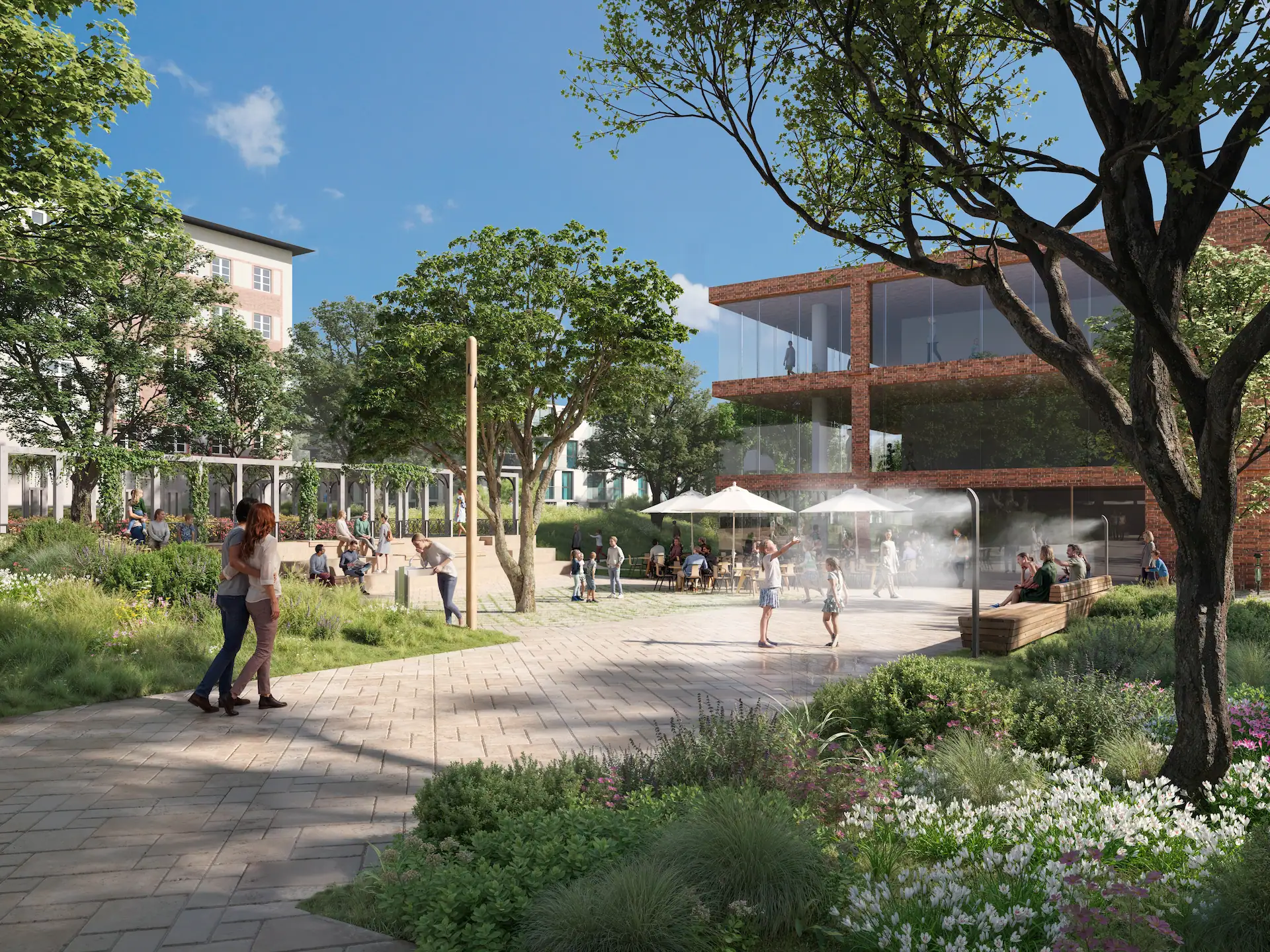
Here, climate and water resilience are embedded, not showcased. Permeable surfaces, shaded microclimates, and integrated water features, such as subtle cooling elements within the plaza, support comfort without becoming spectacle. The café edge and public seating act as spatial anchors. Children playing in misted air, people gathering under trees, informal use over formal choreography, these are not lifestyle clichés; they are operational decisions about how public space performs.

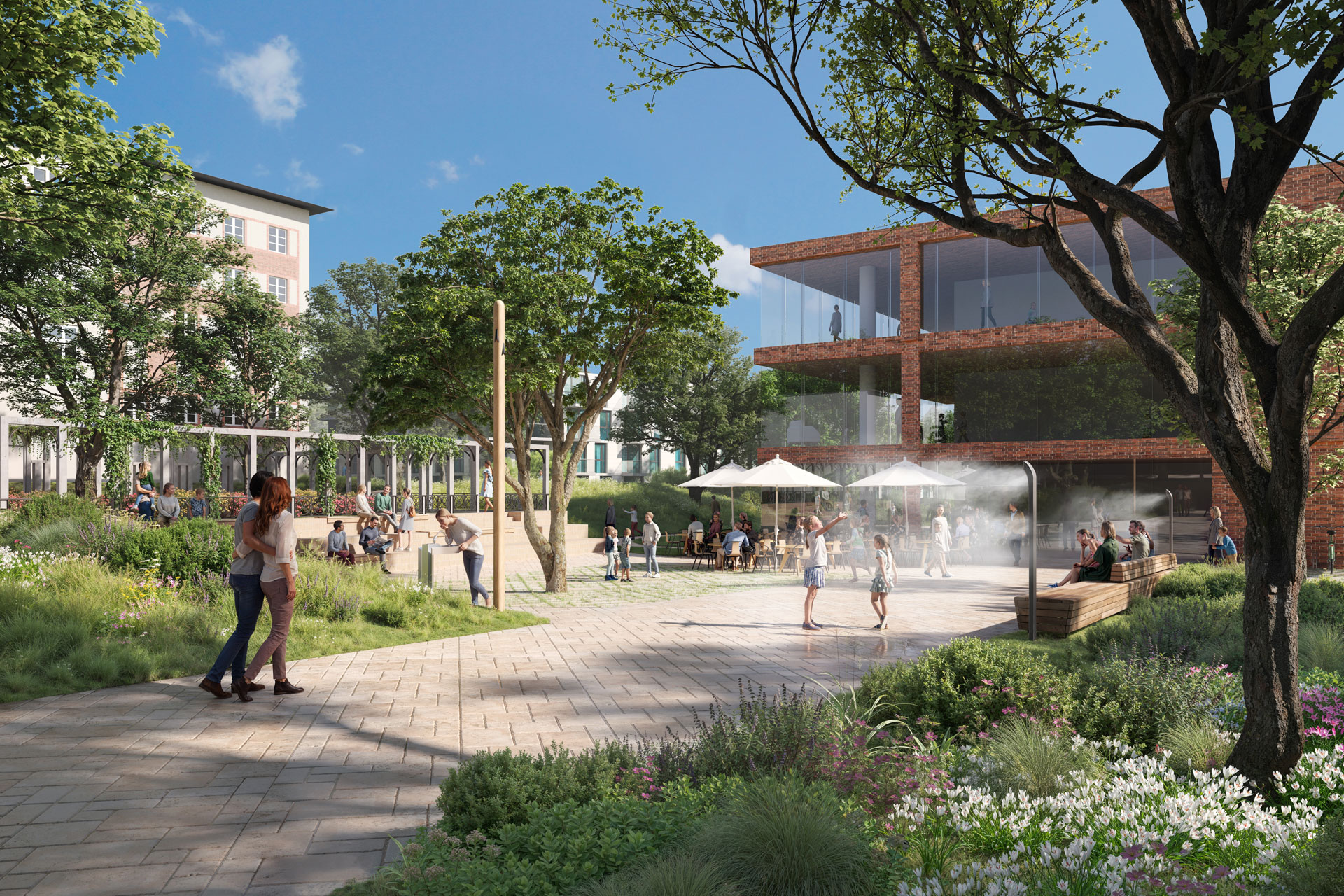
Our role was to translate the design into something legible during the competition phase. We developed four sketches and two final architectural renderings, enough to communicate intent without over-defining it. One image frames the café façade and arrival plaza, balancing built mass with open ground. The other moves into the park, where greenery, filtered light, and everyday use take over. The goal was clarity: showing how people move, pause, and share space. As we often say, images serve the project, they shouldn’t become the project.

Compared to peer submissions, this proposal stands out for its operational intelligence. It doesn’t try to compete visually; it competes experientially. That’s the shift many architects still underestimate. In competitions today, you’re not just presenting a design, you’re presenting how a place will be used.

The takeaway is straightforward: in complex heritage contexts, clarity wins. Capattistaubach’s scheme doesn’t overwrite the site, it reorganizes it. And that precision, supported by clear visualization and disciplined storytelling, is what ultimately secured the competition win in Darmstadt.


Location

Darmstadt, Germany


Partner


Team

Róbert Andrékó
Mariia Lazaryk
Luka Popovic


BECOME OUR NEXT CLIENT

Get in touch