Brabus Island Baku
Animating for the German Tuner Selling Branded Residences on the Caspian
How did a German tuning workshop become a luxury lifestyle brand?

In 1977, in Bottrop, in Germany’s industrial Ruhr, Bodo Buschmann and Klaus Brackmann opened a small workshop tuning Mercedes-Benz saloons. The name they chose compressed their surnames. Nearly half a century on, Brabus is still tuning Mercedes-Benzes, supplying louder, faster, darker iterations of the company’s V8 and V12 platforms to private buyers from Munich to Baku, alongside a parallel line of high-performance boats, motorcycles and lifestyle goods.
It is also, now, selling apartments. In May 2026 the company unveiled Brabus Island Baku, an apartment-and-villa development on the Caspian Sea inside Azerbaijan’s Sea Breeze resort city, in cooperation with Reportage Group. It is Brabus’s second branded residence in twelve months, after a sister project announced in Abu Dhabi in April 2025.
“Our real estate ventures allow us to expand the DNA of our brand farther beyond mobility than ever,” said Constantin Buschmann, Brabus’s chief executive and son of co-founder Bodo, at the launch.
Where is Brabus Island Baku located?
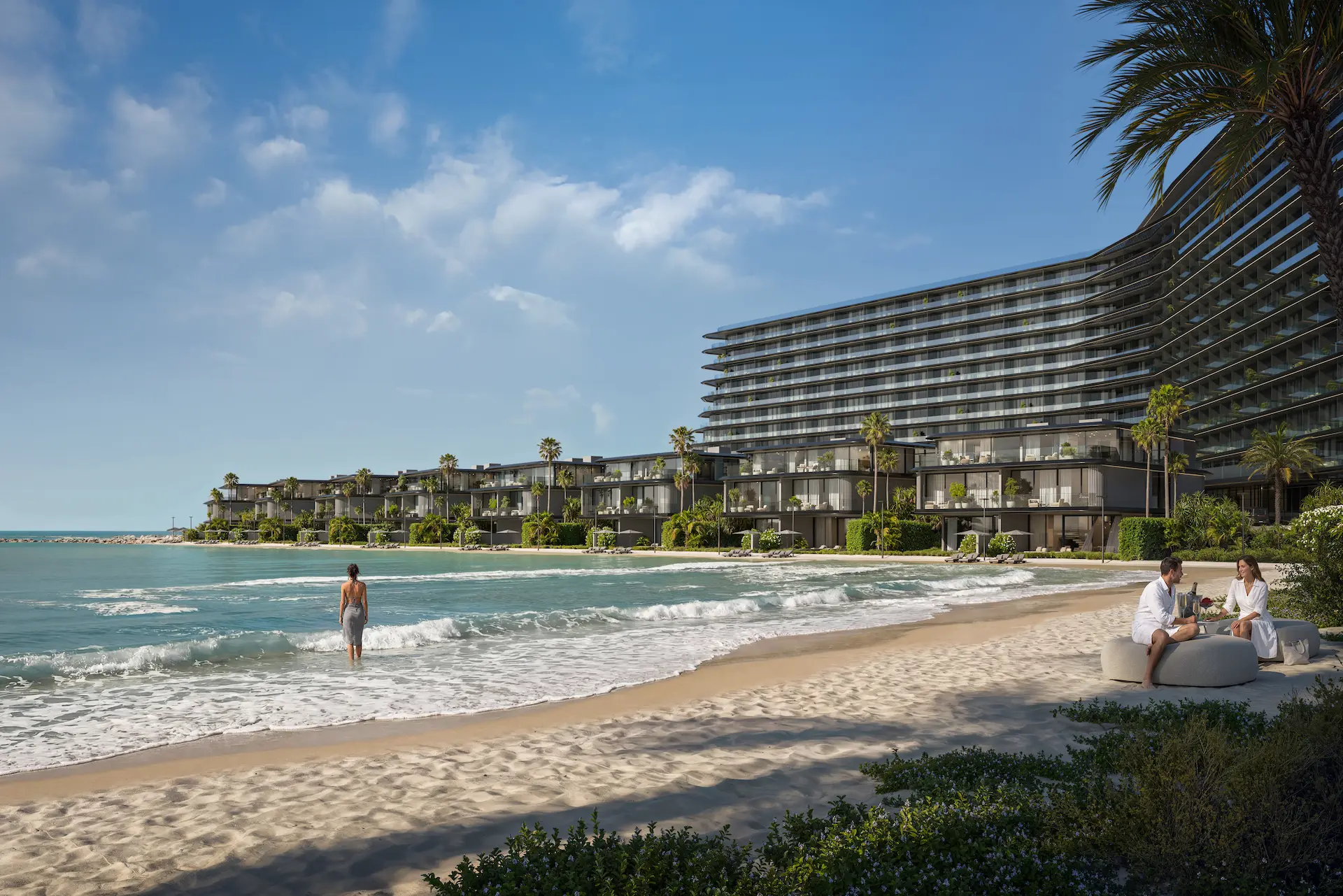
The Baku scheme runs to roughly 115.000 square metres in Nardaran, a coastal suburb a half-hour or so north of central Baku, and is being developed in partnership with Reportage, Agalarov Development, and Sabah Investment Group, one of Azerbaijan’s larger property and consumer holdings.
Brabus’s marketing puts the unit count at 592 apartments plus 16 twin villas, with completion slated for 2030. The Sea Breeze masterplan itself is a 750-hectare privately developed resort city founded in 2006 by Emin Agalarov, the singer and businessman, and now home to more than 3.5 million square metres of built real estate.
Brabus is the second international brand to land there in a year, following Panorama by Elie Saab, announced in November 2025 by the same Sabah-Reportage partnership.
How big is the branded-residence market?
Branded residences are not a category Brabus invented, and increasingly not one in which it is alone. Savills, the property consultancy, counted more than 700 schemes globally in 2025/26, commanding average premiums above 30 per cent over comparable unbranded stock; resort locations push that figure past 39 per cent.
The roster of brands willing to lend their name to a building has stretched from the predictable hospitality lineage, Four Seasons, Mandarin Oriental, Ritz-Carlton, into fashion and motoring. Karl Lagerfeld branded villas have been announced in multiple resort markets. Mercedes-Benz Places, a tower built with Binghatti, is rising in downtown Dubai. Aston Martin and Bentley have residences in Miami; Porsche Design has had its tower there for nearly a decade. Bugatti has signed with Binghatti as well, as have Bvlgari, Armani and Versace elsewhere. For the brand, the residence is a permanent advertisement and a recurring revenue line; for the developer, it is a 30-per-cent price uplift wrapped in a logo.
What makes branded-residence visualisation different?
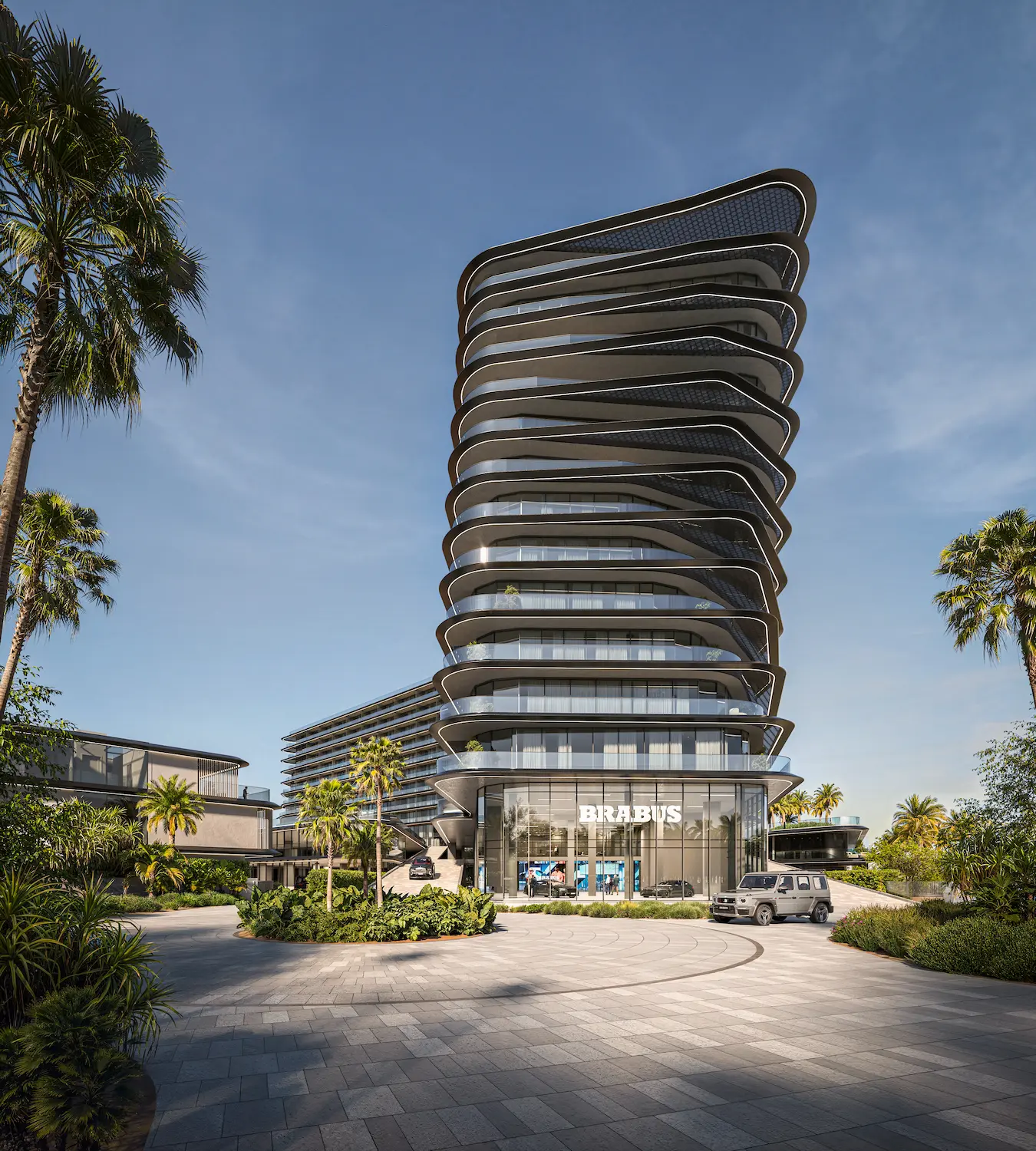
The catch is that the brand has to be enforced, onto the building, the bathroom tiling, the rim of the car parked at the kerb of the launch render.
For our studio, commissioned to produce the imagery for Brabus Island Baku, that is where the work materially differs from a conventional development brief. We sit at the more cinematic end of the industry, where developer-commissioned films now do much of the heavy lifting in selling buildings that do not yet exist.
A typical project has one client. Brabus Island had four voices around the table: Brabus from Bottrop, policing the dark, masculine look the company has built across its supercars; a developer organising delivery; a local investor in Baku who thinks about the local market; and architects designing the building.
Why is brand accuracy so important in luxury real-estate renderings?
The most-scrutinised object in many of the exterior images was not the architecture. It was a single Brabus car that had to read as authentically Brabus to anyone who knows the cars. A wrong tyre profile or a misrendered logo reads instantly to the brand’s audience, and the same precision that defines a Brabus vehicle had to hold in every render.
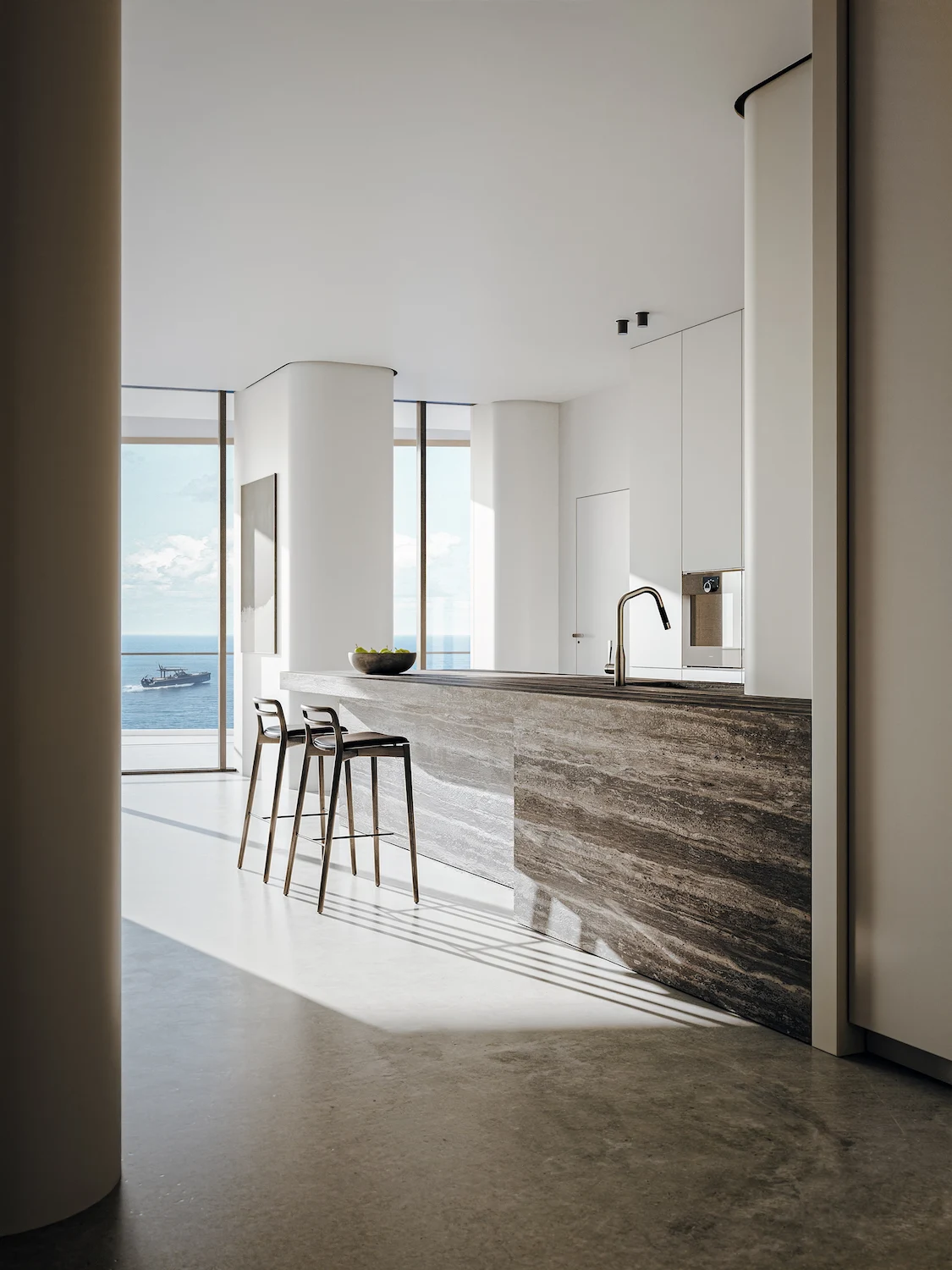
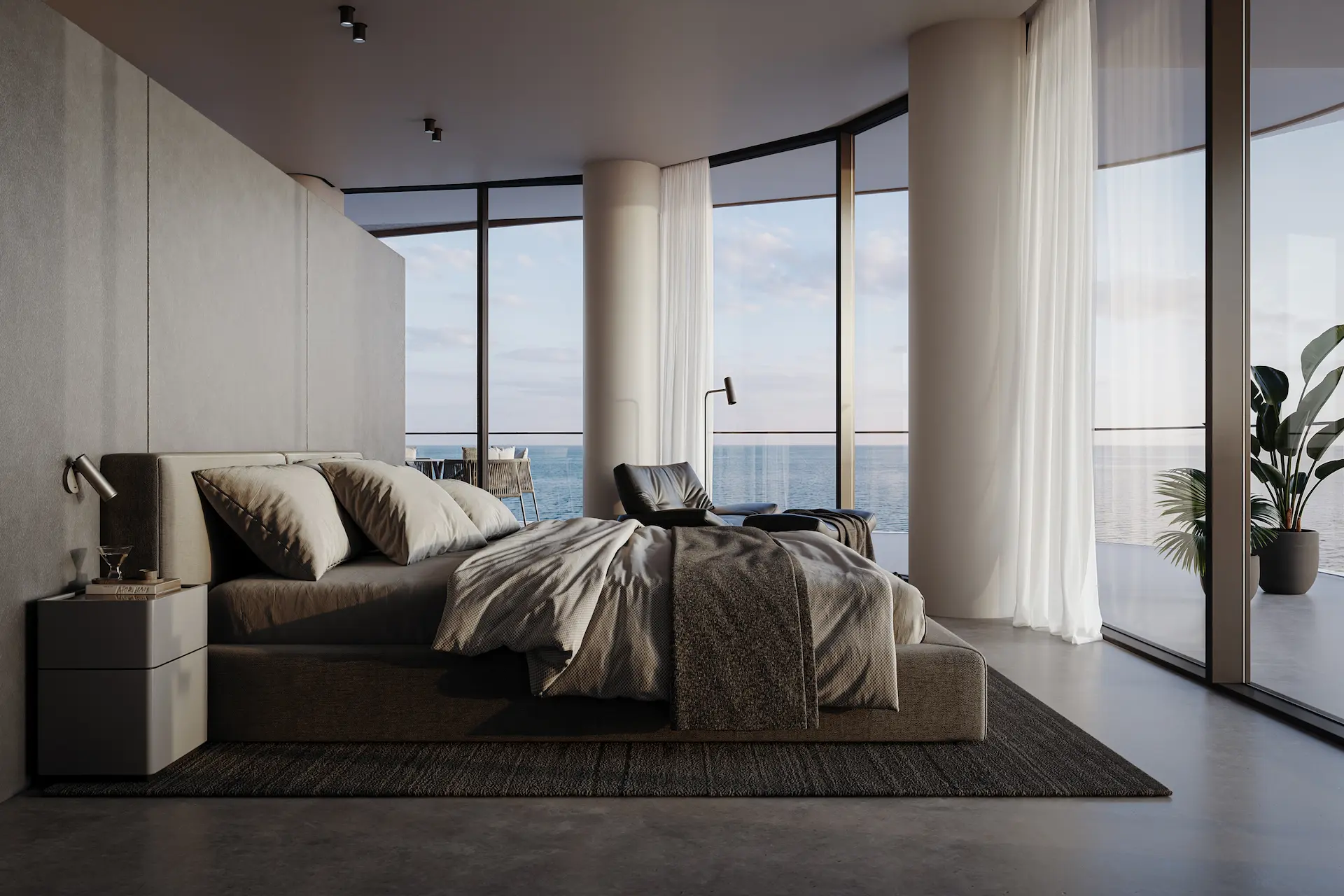
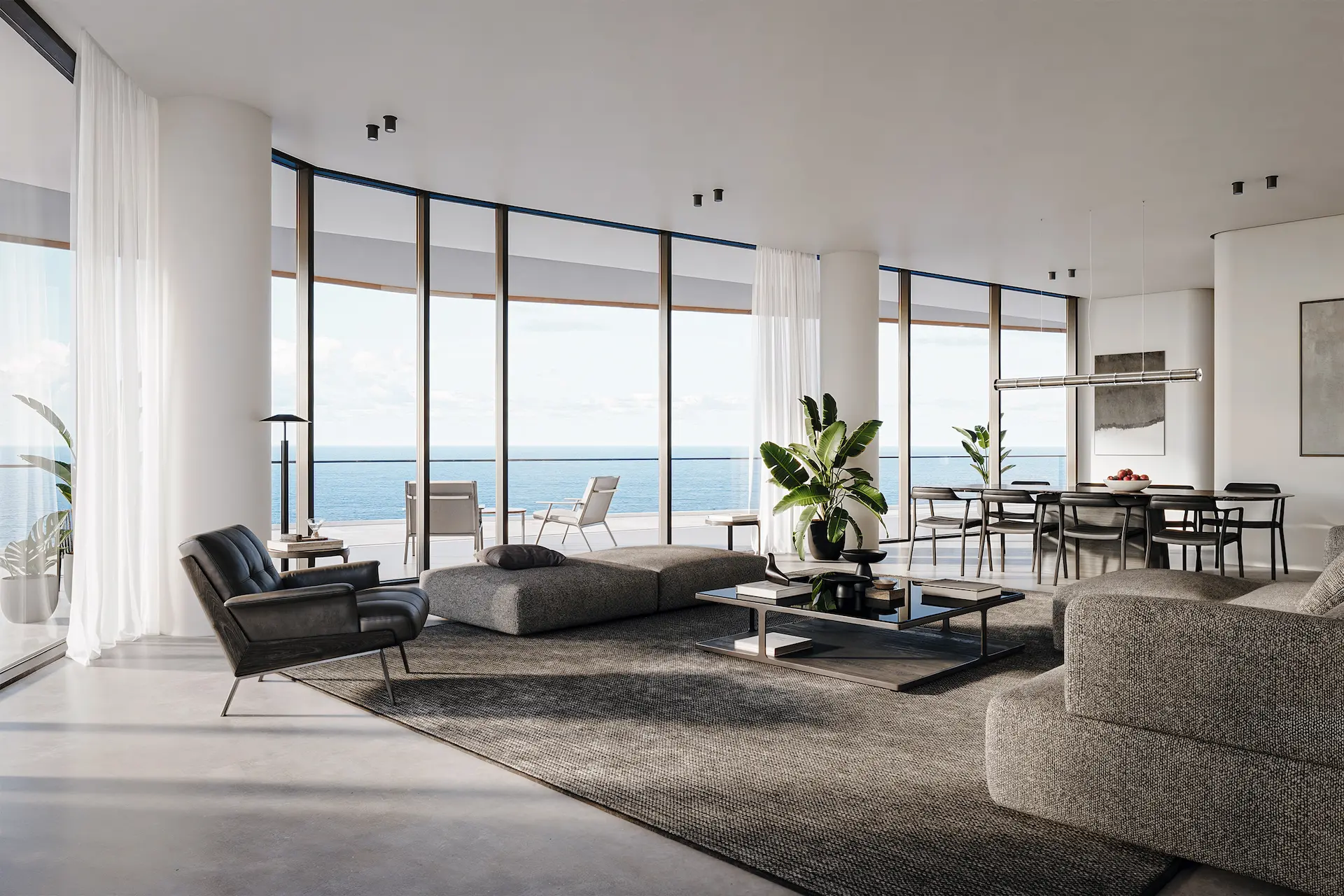
Across the project, the brand’s three signature interior moods, Black & Bold, White Bliss and Grey Haven, were adapted to the Caspian setting. The dark, machined detailing that defines a Brabus car was translated, scene by scene, into stone floors, blackened metal joinery and tinted glass.
The central challenge of branded-residence production is that a brand DNA built around one product category, on one continent, has to be made literal in another, without losing the signature on the way. Brabus’s design language is unambiguously German, automotive, and dark; the Baku project sits on the Caspian, where a buyer’s reference points for luxury living are different. The work of the visualisation, in effect, is to hold both, to keep the brand recognisable to anyone who knows the cars, while letting the architecture and the setting do the work of locating it on the Caspian shore.
What did we deliver for the Brabus launch?
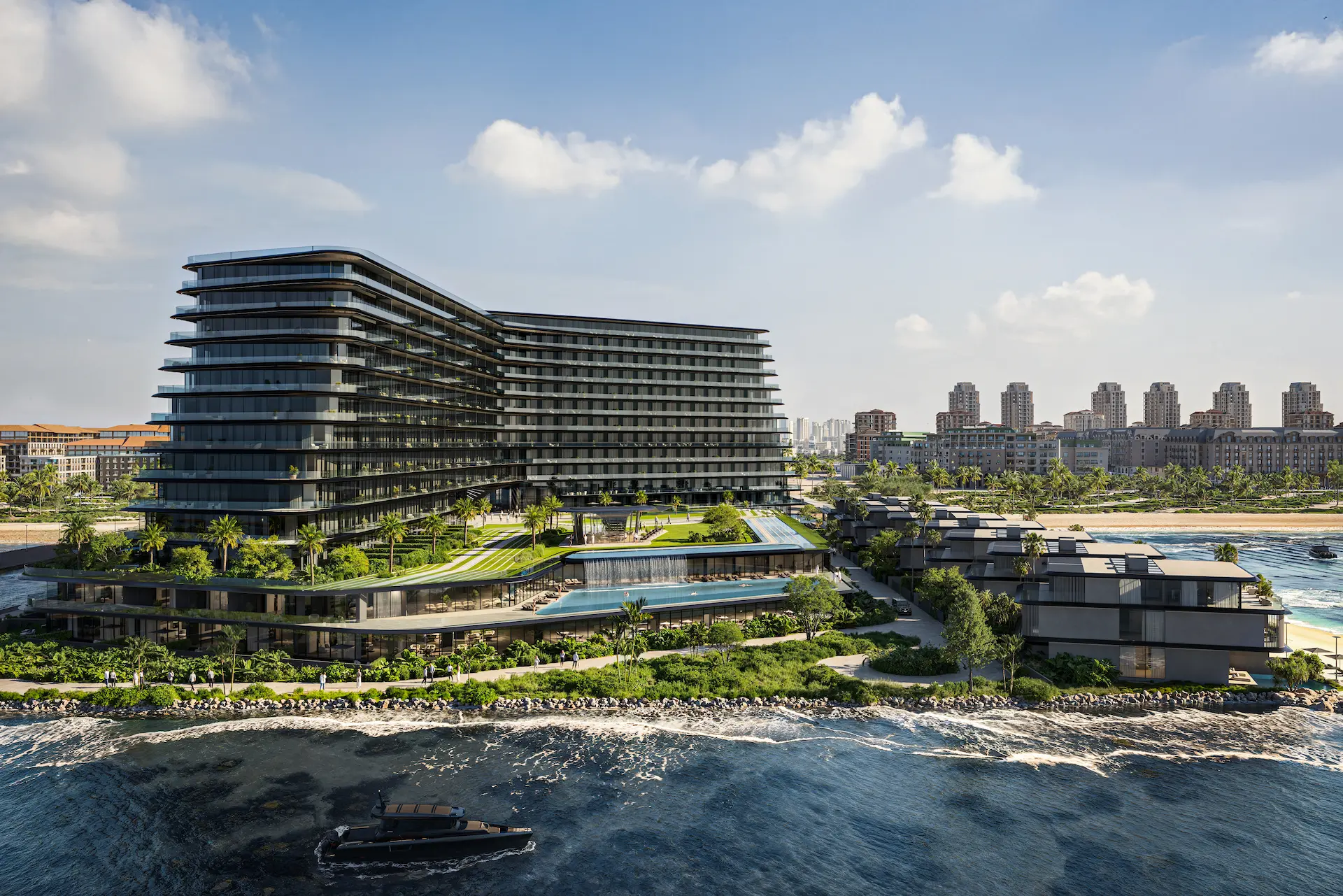
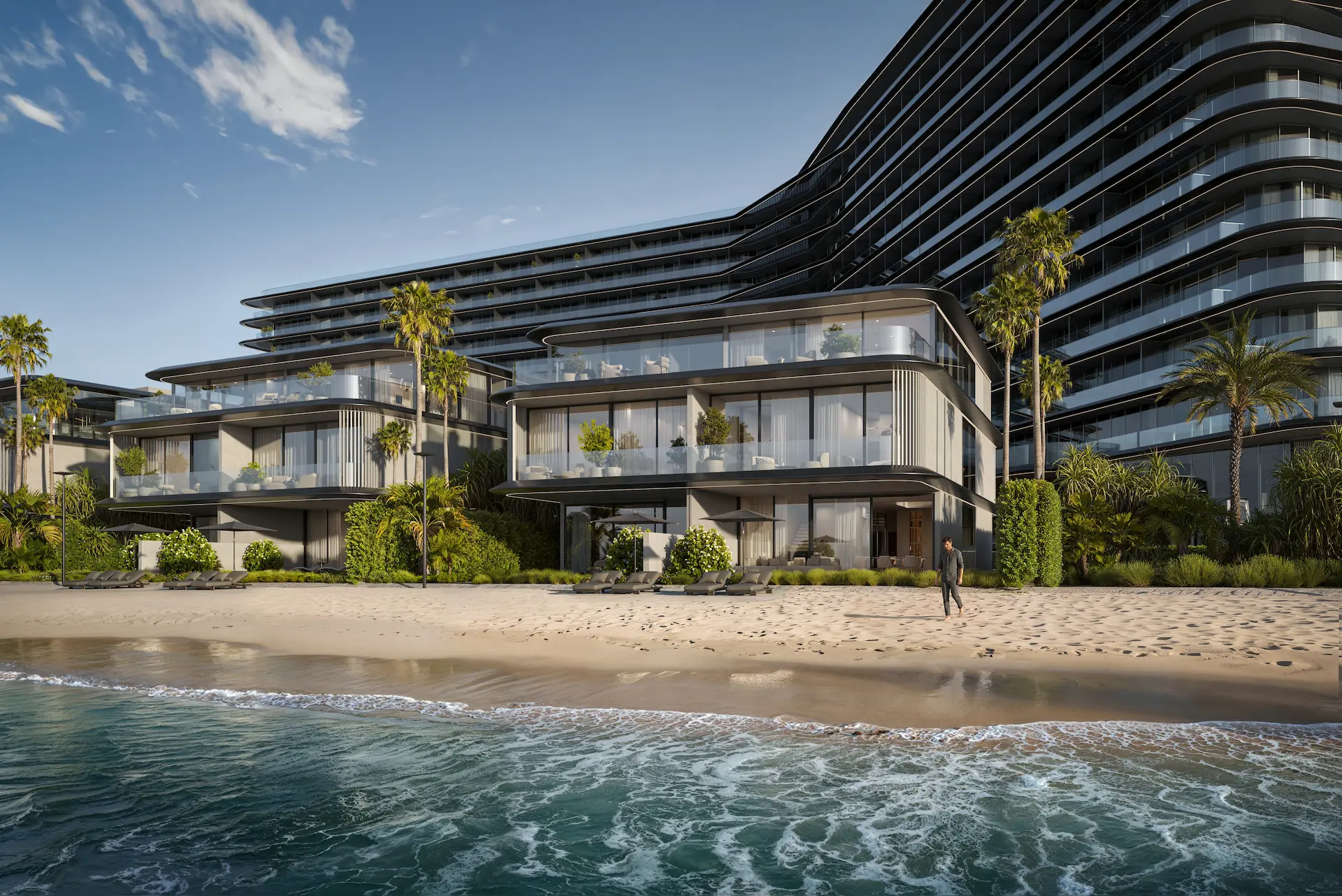
The visualisation package delivered to Reportage Group and Brabus was, in the end, countable. Thirteen exterior renders. Ten interior frames. Twenty-two animation sequences edited into the project’s launch film: a first-person view pass through the development; a swimming-pool shot; a marina view; a kitchen; a balcony, the table set with champagne.
Each of the three streams — exteriors, interiors, animation — was produced within a roughly two-week window on very intensive pipelines, with the team handling stakeholder feedback from every direction while holding the launch deadlines.
The earliest set of exterior images was not made for buyers at all. It was rendered originally for a government presentation in Baku, in which clarity and impression mattered more than precision; only later was the visual brief rewritten when Brabus took creative control. The interiors were aimed at international and local buyers alike.
The launch animation was timed to a reveal event in Baku in late May. Of the three streams, it was the most compressed: two weeks to create, light and render a 50-second film built from 22 sequences. Animation is often the last piece scoped in branded-residence work, even when it is the piece that actually carries the launch, and, increasingly, the asset that does the heaviest marketing work in a category where the brand itself is the product.
What is the role of visualisation in selling off-plan branded residences?
The images and videos are no longer just selling units. It is translating a brand’s message, a half-century of horsepower, a particular shade of dark, the right silhouette of a logo, into something that reads as a place. The renderer sits where that translation happens, mediating between a German engineering company, an Emirati developer, an Azerbaijani investor and a project that will not exist for months or years. The image is what the buyers have.
As more brands move into property, Lagerfeld, Mercedes-Benz, Aston Martin, Bentley, Bugatti, and the rest of the field, this becomes the job. Brabus Island Baku will be ready, its developers say, in 2030. Until then, the buyers have our renders, and a brand’s promise that what is shown is what arrives.
Project details
Location
Baku, Azerbaijan
Client
Architecture
Creative Direction
Alexander Schmeinck (Brabus)
Edit
Alexander Schmeinck (Brabus)
Team
Emilija Morica
Botond Sass
Samer Saniour
Links
